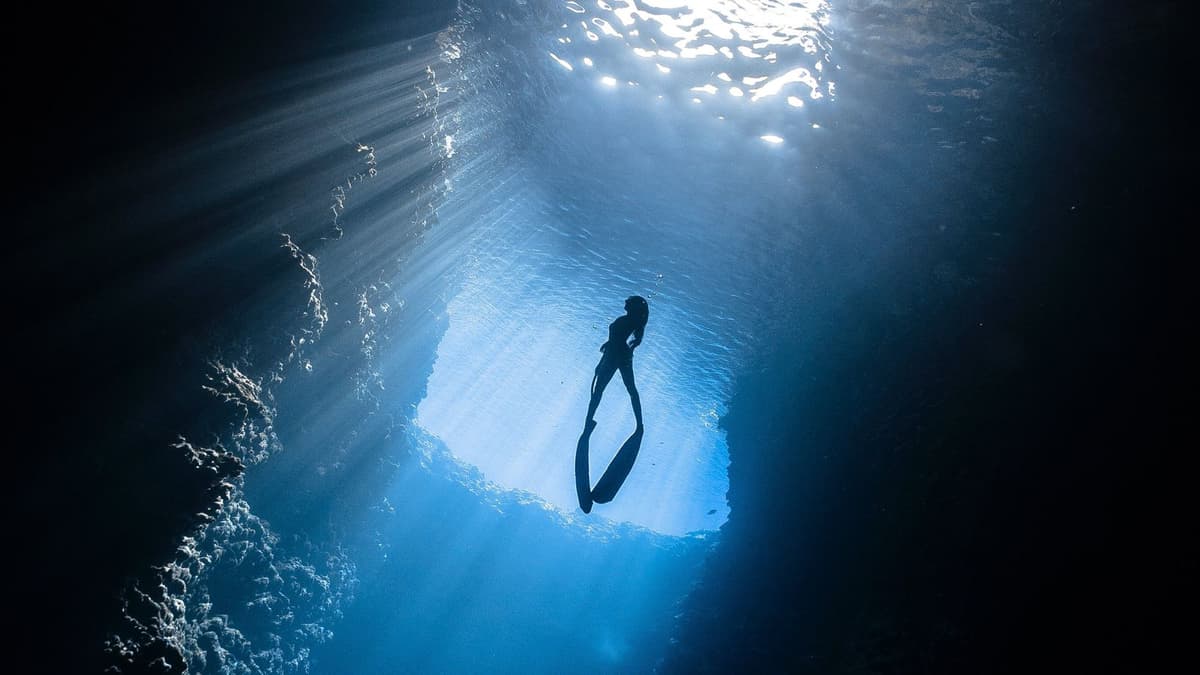
Best Diving Documentaries | 9 Films Every Diver Should Watch

Diver since fourteen. Learned in open water off the Atlantic coast and the Florida Keys, and have dived everywhere from Sipadan to the cold water of home. Decades of gear choices — good and bad — behind every recommendation.
Just so you know, some links on this page are affiliate links. If you buy something via them, we get a small kickback. You don't pay more, but it helps toward the next dive trip.
Looking for more gear recommendations?
Browse All GuidesThere's something about watching diving footage that makes you want to book your next dive immediately. The best diving documentaries don't just show you underwater -- they change how you think about the ocean, about risk, and about why we descend in the first place.
I've watched dozens of underwater films and series. These nine are the ones that actually deliver -- stunning visuals, genuine drama, or real insight into what happens beneath the surface.
Quick Picks
| Documentary | Year | Type | Best For | Where to Watch |
|---|---|---|---|---|
| Blue Planet II | 2017 | Series (7 eps) | Underwater cinematography | Prime Video |
| Last Breath | 2019 | Feature film | Edge-of-seat drama | Prime Video, Netflix |
| My Octopus Teacher | 2020 | Feature film | Emotional connection | Netflix |
| The Deepest Breath | 2023 | Feature film | Freediving | Netflix |
| Diving into the Unknown | 2016 | Feature film | Cave diving | Prime Video |
| Jago: A Life Underwater | 2015 | Feature film | Breath-hold tradition | Prime Video |
| Chasing Coral | 2017 | Feature film | Conservation urgency | Netflix |
| The Silent World | 1956 | Feature film | Diving history | Prime Video (rental) |
| Blue Planet (Original) | 2001 | Series (8 eps) | Classic Attenborough | Prime Video |
Most of these stream free with Prime Video -- a free trial covers you for a proper diving documentary marathon if you don't already have it.
The Essential Three
Blue Planet II (2017, BBC)
The gold standard. Five years of filming. Over 6,000 hours of footage. Underwater technology that didn't exist when the original Blue Planet aired. The "Deep" episode alone -- featuring creatures in the hadal zone that look like they evolved on another planet -- justifies the entire production.
Hans Zimmer's score elevates footage that was already extraordinary. The final episode on ocean plastic predates mainstream awareness of the crisis by about two years. This series changed policy.
For divers specifically: The technical achievement is staggering. You'll recognize dive sites and species, but filmed with patience and equipment that makes your GoPro footage look like it was shot through a sock. Humbling and inspiring in equal measure.
Where to watch: Prime Video (included with Prime).
Last Breath (2019)
The most gripping diving film ever made. A saturation diver's umbilical is severed during a storm on the North Sea floor. He has five minutes of emergency gas. The rescue takes thirty minutes. This actually happened.
The film reconstructs the event using real audio, interviews with the divers involved, and underwater re-enactments that are sickeningly realistic. If you've ever wondered what commercial saturation diving actually involves, this film answers every question -- and raises terrifying new ones.
For divers specifically: You'll never look at a dive computer's gas reading the same way. The film makes you viscerally aware of how thin the margin is between a good dive and a catastrophe.
Where to watch: Prime Video (included), Netflix (varies by region).
My Octopus Teacher (2020)
Craig Foster's daily visits to a single octopus in a South African kelp forest. What sounds like it should be boring is somehow one of the most emotional nature documentaries ever made. The relationship Foster builds with this animal over a year -- and what it teaches him -- is genuinely moving.
Oscar winner for Best Documentary Feature. Deserved.
For divers specifically: A reminder that the most extraordinary underwater encounters don't require exotic destinations or deep dives. Foster freedives in a kelp forest close to his home. The observation skills he develops are what every diver should aspire to.
Where to watch: Netflix.
For the Adrenaline Junkie
The Deepest Breath (2023)
Freediving documentary following Alessia Zecchini and Stephen Keenan. Beautiful and devastating. The film captures both the serene beauty of competitive freediving and its lethal risks with equal clarity.
For divers: Puts your SCUBA comfort zone in perspective. These athletes descend to depths that would require technical diving setups -- on a single breath.
Where to watch: Netflix.
Diving into the Unknown (2016)
Finnish cave divers return to a flooded cave to recover the bodies of two friends who died on a previous expedition. Illegal, dangerous, and driven by loyalty that's hard to argue with. The underwater footage in near-zero visibility is genuinely claustrophobic.
For divers: Cave diving is a world apart from open water. This film shows why specialized training exists and why the rules about never exceeding your certification level exist.
Where to watch: Prime Video (rental), occasionally on streaming platforms.
For Conservation Awareness
Chasing Coral (2017)
Time-lapse footage of coral bleaching events. The technology the team develops to capture this -- and the emotional toll of watching reefs die in real time -- makes this more than another environmental documentary. It's a record of what we're losing.
For divers: If you've dived coral reefs, this hits differently. The bleaching footage shows reefs you may have visited. It's a call to action wrapped in stunning cinematography.
Where to watch: Netflix.
For History and Tradition
The Silent World (1956)
Jacques Cousteau's first feature film. Won the Palme d'Or at Cannes. The underwater footage was revolutionary for its time -- audiences had literally never seen this before. Some practices shown (dynamite fishing, riding sea turtles) are jarring by modern standards, but that's part of its historical value.
For divers: This is where recreational diving culture begins. Cousteau's equipment in this film led directly to the regulators we use today. Watch it as history, not instruction.
Where to watch: Prime Video (rental), specialty streaming services.
Jago: A Life Underwater (2015)
Rohani, an 80-year-old Bajau sea nomad, has been freediving for his entire life. The film follows his daily routine of hunting and fishing on breath-hold dives in the Coral Triangle. His lung capacity and comfort underwater are superhuman by Western standards -- the result of a lifetime of adaptation.
For divers: A reality check on what the human body can actually do underwater without equipment. Also a beautifully shot meditation on a way of life that's disappearing.
Where to watch: Prime Video (included with some subscriptions), YouTube (rental).
Blue Planet (Original, 2001)
David Attenborough's first deep-ocean series. While Blue Planet II surpassed it technically, the original has a purity and wonder that's worth experiencing. The deep-sea footage was groundbreaking at the time, and Attenborough's narration is, as always, impeccable.
Where to watch: Prime Video.
Where These Films Take You
Each film points toward a real diving destination or discipline.
Blue Planet II -- The cold-water kelp sequences were filmed in South Africa and British Columbia. US divers have equivalent kelp forests off California -- particularly the Channel Islands and Monterey Bay, two of the most productive cold-water dive environments anywhere. The California dive gear guide covers the 7mm wetsuit and glove setup those water temperatures require.
Last Breath -- The saturation diving in this film has nothing in common with recreational diving except the underwater environment. But the gas management habits it creates apply to every dive you do. Every time you check your NDL and remaining pressure on descent, you are running a simplified version of the calculations that mattered in this film. The best dive computer guide covers what handles those calculations for recreational divers.
My Octopus Teacher -- Foster dives in False Bay, Cape Town -- cold temperate kelp, similar in character to California diving. The observation technique he demonstrates works anywhere. A diver who makes twenty dives at the same local site learns more than one who visits twenty different locations once each.
The Deepest Breath -- Competitive freediving sites include Dahab's Blue Hole in Egypt, Dean's Blue Hole in the Bahamas, and Roatan in Honduras. The Blue Hole is accessible to recreational scuba divers as well as freedivers. If this film makes you curious about breath-hold diving, PADI and SSI both offer recreational freediving certifications that are entirely separate from your scuba qualification.
Diving into the Unknown -- US cave diving is centred in Florida: Ginnie Springs, Devil's Den, and the cave systems around Gainesville are among the most accessible technical diving environments in the world. Missouri and Texas have additional spring cave systems. The rule at the core of this film -- never penetrate past your thirds -- is not optional in cave diving training. This film makes the argument for certification limits better than any instructor briefing.
Chasing Coral -- The bleaching events documented here hit the Great Barrier Reef, Hawaiian reefs, and the Caribbean hard. The Florida Keys Reef Tract is the third largest barrier reef system in the world and has experienced repeated bleaching events in recent years. PADI Project AWARE runs reef health survey programmes that let you contribute data while diving at recreational sites. The Florida dive gear guide covers conditions on the Keys reef system.
The Silent World -- Cousteau's expeditions centred on the Mediterranean and the Red Sea. The sites are accessible. The practices shown are not acceptable by any modern standard -- dynamite fishing, riding sea turtles, handling marine life. Watch it as a historical document of how diving culture began, not as instruction.
Jago: A Life Underwater -- Rohani dives in the Sulu Sea and around the Philippines, part of the Coral Triangle -- the highest marine biodiversity zone on earth. For US divers, liveaboard trips to Raja Ampat in West Papua or Tubbataha Reef in the Philippines are the standard route to seeing the reef systems the Bajau sea nomads have always known. Flying time from the west coast runs roughly 20-24 hours.
Blue Planet (Original) -- Watching both Blue Planet and Blue Planet II back to back shows how underwater filming technology advanced in sixteen years -- and how visibly ocean health deteriorated in the same period. The contrast between the 2001 and 2017 coral reef sequences is one of the most effective conservation arguments either series makes.
How to Get the Most from Diving Films
Watch on the biggest screen you can. Underwater cinematography is made for large displays. A laptop doesn't do Blue Planet II justice.
Watch with good audio. Half the atmosphere in these films comes from the sound design -- the breathing, the bubbles, the silence of deep water.
Take notes. Seriously. You'll spot dive sites, species, and equipment that inspire your next trip or purchase. I keep a list of "things I want to see" that started from documentaries.
Watch with non-divers. These films are the best recruitment tool the diving community has. My Octopus Teacher alone has convinced more people to try diving than any marketing campaign.
Worth Adding to Your List
Three films that missed the main nine but are worth your time.
Mission Blue (2014, Netflix) -- Sylvia Earle's decades-long campaign to establish marine protected areas. Earle has logged over 7,000 hours underwater across fifty years of professional diving, and the footage accumulated across that career is extraordinary. The Hope Spots concept she champions has influenced real marine conservation policy. If the science communication in Blue Planet II appeals, this is a natural follow-on.
The Rescue (2021, Disney+) -- The Tham Luang cave rescue told largely through the British cave divers who were central to it. Their descriptions of navigating flooded, zero-visibility passages while carrying unconscious children give you a precise sense of what advanced cave diving skill actually means in practice. One of the better documentaries made in recent years regardless of subject matter.
Secrets of the Whales (2021, Disney+) -- James Cameron and Brian Skerry, four episodes on whale communication and culture. Less directly about diving than the others, but the underwater cinematography matches Blue Planet II and the behavioural science is absorbing. Worth watching if the ocean interests you beyond the act of descending into it.
What to Avoid
Not all underwater content is worth your time.
Megalodon: The Monster Shark Lives (Discovery Channel, 2013) -- Presented as a documentary but entirely fictional. Discovery Channel broadcast this as evidence of a living megalodon. It used actors playing researchers and fabricated footage. Scientists were furious. It is the most dishonest thing the network has broadcast. Avoid it and anything in the same genre.
Discovery Channel's Shark Week (most recent seasons) -- The series has declined from genuine marine biology content into sensationalism and manufactured drama. Earlier seasons (late 1980s through early 2000s) produced real science. Recent seasons prioritise fear. For accurate shark content, try Playing with Sharks (2021) about Valerie Taylor, or National Geographic's shark programming instead.
The Abyss (1989) -- A fiction film, not a documentary, but it circulates in online lists as "realistic diving content." The underwater sequences are visually spectacular and the production involved real professional divers. The physics are fantastical. Worth watching as cinema; misleading as any kind of preparation for what diving involves.
YouTube "best dive sites in the world" compilations -- These are ubiquitous and almost entirely composed of recycled footage from a handful of famous locations -- the Blue Hole, Mexican cenotes, the Maldives -- spread across hundreds of channels. They create unrealistic expectations and push beginners toward expensive remote destinations before they have the skills to benefit from them. The nine films above will give you a better picture of what diving actually involves.
Beyond Films: Podcasts and Books
The underwater world has excellent content beyond streaming documentaries.
Podcasts worth following:
The Scuba Diver Life Podcast is practical and well-produced, covering equipment, travel, and technique. A good companion for long drives to dive sites.
DAN Diver from Divers Alert Network focuses on safety and medical topics. Statistical analysis of dive accidents, decompression illness, and ear barotrauma -- dry delivery but useful for improving decision-making.
Breaking Trail from PADI TV covers travel, marine conservation, and diving culture with a US-focused perspective.
Books worth reading:
The Sea Around Us by Rachel Carson remains the most beautifully written overview of ocean science. Published in 1951, before scuba diving became widespread -- the science has been updated but the writing hasn't dated.
Shadow Divers by Robert Kurson follows two divers attempting to identify an unknown German U-boat off New Jersey. Part diving narrative, part World War II history. Completely readable even for non-divers.
Four Fish by Paul Greenberg covers the collapse of commercial fish populations and the economics behind it. Relevant context for any diver who pays attention to what's declining on their regular dive sites.
Shark Lady by Eugenie Clark is accessible enough for non-specialists and captures the early years of underwater research in a way the documentaries don't.
From Screen to Water
Documentaries are effective at creating the itch. Here is where to scratch it.
If Last Breath made you think about gas management: Your dive computer handles this for recreational diving. The best dive computer guide covers the options from the entry-level Cressi Leonardo -- solid for new divers through advanced certification -- to the premium Shearwater Peregrine, the most recommended computer among experienced divers.
If Blue Planet II or Jago made you think about a dive trip: Cold-water kelp diving starts in California. The California dive gear guide covers conditions and gear for Channel Islands and Monterey diving. Warm-water reef diving in the US starts in Florida -- the Florida dive gear guide covers the Keys and conditions there.
If Blue Planet II made you think about underwater photography: Start with a GoPro or Olympus Tough TG-7 before investing in a dedicated underwater housing. The bottleneck is buoyancy control. Once you can hover motionless without touching the bottom, a basic action camera produces better footage than a large rig in clumsy hands.
If any of these made you think about learning to dive: The beginner dive gear guide covers what to hire versus buy for your open water course, and what the first year of diving in the US typically costs in total.
Start with Blue Planet II. Watch My Octopus Teacher after. By the time Chasing Coral arrives you'll understand what divers are working to protect and why it matters. These films don't just show you the underwater world -- they change how you look at the ocean from above it. All three are available on Netflix or streaming rental and represent roughly six hours of some of the best underwater cinematography ever made.
Frequently Asked Questions
Related Guides
Find Your Perfect Gear
Expert guides for masks, fins, BCDs, regulators, and more. Gear up safely for your next dive.
Browse All Guides