
Best Dive Masks 2026

Diver since fourteen. Learned in open water off the Atlantic coast and the Florida Keys, and have dived everywhere from Sipadan to the cold water of home. Decades of gear choices — good and bad — behind every recommendation.
Just so you know, some links on this page are affiliate links. If you buy something via them, we get a small kickback. You don't pay more, but it helps toward the next dive trip.
Looking for more gear recommendations?
Browse All GuidesA good mask disappears. You stop noticing it before you hit 20 feet, and from there you're just diving -- watching a hawksbill work through a coral head, reading your computer, checking in with your buddy. That is what a properly fitted mask does: nothing. It lets you dive.
The mask that does nothing for one diver leaks constantly on another. Face shape determines fit, and fit determines everything. we've watched divers splash out on premium optics that leaked on every descent while their buddy dove unbothered in a budget Cressi. The physics doesn't care about the price tag.
Once fit is sorted, quality matters. Better silicone, better lenses, better construction. These recommendations balance fit versatility with build quality, covering the range from budget to premium.
Quick Picks
Not sure which setup is right for you?
Browse All GuidesWhy Fit Matters More Than Brand
Masks aren't one-size-fits-all. The most expensive mask won't work if it doesn't match your face shape. The silicone skirt needs to contact your skin evenly all the way around, at your temples, along your cheekbones, across the bridge of your nose, and under your nose without pressing on your nostrils.
The Fit Test: Before buying any mask, place it on your face without using the strap. Inhale gently through your nose. The mask should stay in place by suction alone. If it falls off, or you feel air leaking around the edges, that mask doesn't fit your face. Move on to the next one.
This is why buying from dive shops where you can try masks on is the better move, or from retailers with good return policies. Ordering online based on reviews alone is risky because someone with a narrow face and high nose bridge will have completely different results than someone with a wide face and flat nose bridge.
Face shape considerations: - Narrow faces: Cressi F1, Tusa M-212 tend to fit well - Wide faces: Scubapro Frameless, Atomic Venom accommodate broader faces - High nose bridge: Dual-lens masks often work better than single-lens - Facial hair: Keeping stubble short helps, but some masks seal better over beards than others
Why These Recommendations
we've tried dozens of masks over the years and talked to hundreds of divers about their favorites. These picks consistently get positive feedback across different face shapes. Scuba Diving Magazine and Sport Diver reviews align with what we've experienced, quality silicone and tempered glass from established brands outperform no-name alternatives.
Detailed Reviews
Cressi F1 - Best Budget
The [Cressi F1](https://www.amazon.com/dp/B00B5AGJDG?tag=divegearadvice-20&ascsubtag=best-dive-mask-us) is proof that you don't need to spend a lot for a quality mask. It's positioned as entry-level, but the construction says otherwise. The frameless design uses a single piece of silicone bonded directly to a tempered glass lens, eliminating the plastic frame that can crack and fail.
Low internal volume is the F1's superpower. There's less air inside the mask to equalize during descent, and less water to clear if you break the seal. For new divers still mastering mask clearing, this makes a real difference. The compact design also sits close to your face, maximizing your field of vision.
The silicone is soft and flexible, which helps it conform to different face shapes. The F1 tends to fit narrow to medium faces better than wide faces. If you're between sizes or have a broader face, try before you buy or have a backup plan for returns.
One practical advantage: the F1 folds completely flat. For travel divers, this means it takes up almost no space in your luggage and there's no rigid frame to crack in transit.
Pros: - Exceptional value for money - Low internal volume, easy to clear - Frameless design is durable and travel-friendly - Soft silicone conforms to face shape
Cons: - May not fit wide or broad faces - Single lens limits prescription options - Basic strap adjustment mechanism
---
Scubapro Frameless - Pro Favorite
The [Scubapro Frameless](https://www.amazon.com/dp/B011HLF488?tag=divegearadvice-20&ascsubtag=best-dive-mask-us) is the mask you'll see on dive professionals, instructors, and experienced divers worldwide. It sits in the sweet spot between budget and premium, offering professional-grade construction without the luxury markup.
What makes the Frameless special is the fit. The teardrop lens shape and soft double-feathered silicone skirt accommodate a remarkably wide range of face shapes. we've recommended it to divers with narrow faces who couldn't get the Cressi F1 to seal, and to divers with wide faces who found the Venom too small. It just works for most people.
The ultra-low volume design positions the lens close to your eyes, maximizing field of vision. You'll see more of the reef in your peripheral vision, which matters when you're trying to spot that seahorse your dive guide is pointing at. The low volume also means quick, easy clearing.
Like the F1, the Frameless folds flat for travel. Scubapro's silicone is high-quality and durable, Frameless masks are known to last a decade with proper care. The black silicone skirt reduces internal reflections and glare, which most experienced divers prefer. If you're choosing between it and the premium Atomic option, the [Atomic Aquatics Venom vs Scubapro Frameless comparison](/guides/atomic-aquatics-venom-vs-scubapro-frameless) breaks down glass, fit, and value.
Pros: - Fits most face shapes well - Professional-grade construction - Ultra-low volume for easy clearing - Folds flat for travel - Durable, long-lasting silicone
Cons: - Single lens limits prescription options - Black skirt only (no clear version) - Higher price than entry-level masks
---
Cressi Big Eyes Evolution - Wide View
The Cressi Big Eyes Evolution takes a different approach. Instead of minimizing volume, it maximizes field of vision with large inclined lenses that wrap around toward your temples. The result is panoramic peripheral vision that makes you feel less like you're looking through a window and more like you're actually in the underwater environment.
The Big Eyes sits between budget and mid-range. The dual-lens design has a practical advantage beyond looks: you can install prescription lenses. If you wear glasses and don't want to dive with contacts, the Big Eyes is one of the better options for prescription conversion. Several companies sell drop-in prescription lenses that fit the Big Eyes frame.
The silicone skirt is soft and the fit tends to work well for medium to wide faces. Narrow faces may find the mask sits too far from the eyes, reducing the peripheral vision benefit. As always, try before you buy if possible.
One note: the larger internal volume means more air to equalize and more water to clear if you break the seal. For experienced divers this isn't an issue, but beginners might find the smaller-volume masks easier to manage.
Pros: - Excellent panoramic peripheral vision - Prescription lens compatible - Comfortable fit for medium to wide faces - Good value for dual-lens design
Cons: - Higher internal volume, more to clear - May sit too far from narrow faces - Bulkier than frameless designs
---
Atomic Aquatics Venom - Premium Choice
The Atomic Aquatics Venom is where premium starts making sense. Atomic uses Schott Superwite Ultra Clear glass, the same stuff in high-end camera lenses. The optical clarity is noticeably better than standard tempered glass, with virtually no green tint and excellent light transmission.
The silicone is as good as it gets. Atomic's rubber compounds are incredibly soft and maintain that softness year after year. Cheaper masks often see their silicone stiffen and yellow over time, but the Venom stays supple. The fit is comfortable for extended dives, no pressure points or hot spots.
Atomic backs the Venom with a lifetime warranty on the frame and a two-year warranty on the silicone components. They actually honor these warranties without hassle, which matters if you're investing in premium gear.
The Venom works best for medium to wide faces. The wide lens gives you good peripheral vision while keeping internal volume relatively low. It's not as compact as the Frameless, but it's not bulky either.
Is the Venom worth three times the price of the F1? For occasional divers, probably not. For regular divers who appreciate quality and want a mask that will last ten years, the investment pays off in durability and optical clarity.
Pros: - Exceptional optical clarity with Schott glass - Premium silicone stays soft for years - Lifetime warranty on frame - Comfortable fit for extended dives
Cons: - Premium price point - May not fit narrow faces - Higher investment to protect/insure
---
What to Avoid
No-name masks under $25: At this price point, you're getting low-quality silicone that stiffens quickly, plastic frames that crack, and glass that may not be properly tempered. A mask failure underwater is at minimum uncomfortable and at worst dangerous. Don't cheap out here.
Masks with plastic lenses: Real dive masks use tempered glass. Plastic lenses scratch easily, fog worse, and can shatter unpredictably. Snorkel masks often have plastic lenses. Make sure any mask you buy specifies tempered glass.
Full-face masks without proper training: Full-face masks look cool but require specific training and have failure modes that traditional masks don't. They're popular for surface-supplied diving and some specialized applications, but for recreational scuba, stick with traditional half-masks.
Buying based on someone else's recommendation alone: Your buddy's favorite mask might be terrible on your face shape. Use recommendations as starting points, but always verify fit yourself.
---
Buying Considerations
Black vs clear skirt: Black silicone skirts reduce internal reflections and glare, which most experienced divers prefer. Clear skirts let in more peripheral light, which some beginners find less claustrophobic. Neither is objectively better, it's personal preference. For most diving conditions, black works slightly better.
Single lens vs dual lens: Single-lens masks typically have lower internal volume and fold flat for travel. Dual-lens masks allow for prescription lenses and sometimes offer better fit around the nose bridge. Choose based on whether you need prescriptions and how the fit works for your face.
Preparing a new mask: New masks have a release agent on the lens from manufacturing that causes persistent fogging. Before your first dive, scrub the inside of the lens with toothpaste or a flame the lens briefly to burn off the residue. This one-time prep makes a huge difference in fog resistance.
Prescription options: If you need vision correction underwater, you have three choices: wear contacts under a regular mask, buy a mask with prescription lens inserts, or buy stick-on magnifying lenses for reading gauges. Contacts work fine for most people, but dedicated prescription masks are more reliable for regular divers.
---
Our Recommendation
For most American divers, the [Scubapro Frameless](https://www.amazon.com/dp/B011HLF488?tag=divegearadvice-20&ascsubtag=best-dive-mask-us) is the safest bet for fit, build quality, and value. It works for the widest range of face shapes and lasts for years.
Budget-conscious divers should try the [Cressi F1](https://www.amazon.com/dp/B00B5AGJDG?tag=divegearadvice-20&ascsubtag=best-dive-mask-us). If it fits your face, you've found excellent value. If it doesn't, you haven't lost much.
Divers who want the best and are willing to pay for it should consider the Atomic Aquatics Venom. The optical quality and build are noticeably superior, and the lifetime warranty protects your investment.
By your fifth dive with the right mask, you won't remember which one you're wearing. That's the goal. Pick from the options above that passes the suction test on your face, prep the lens properly before the first dive, and get in the water. The mask will take care of itself.
Frequently Asked Questions
What's the suction test and how do I do it?
The suction test is the only reliable way to check mask fit without water. Place the mask on your face without the strap -- just hold it lightly against your skin. Inhale gently through your nose. The mask should hold itself in place against your face for several seconds without you pressing it. If it falls away immediately, the skirt isn't making a seal on your face shape. This test is quick, accurate, and the main reason you should buy a mask from a dive shop rather than online -- you need to try it on your actual face, with your hood if you'll be diving cold water.
Low-volume vs high-volume masks -- which is better?
Low-volume masks (smaller internal air space) are easier to equalise during descent and easier to clear if flooded. The trade-off is a slightly narrower field of view compared to high-volume designs. For recreational scuba diving, the practical difference is small -- any mask with a proper fit will clear easily once you're practiced. Freedivers strongly prefer low-volume masks because minimising air consumption during breath-hold matters; for scuba, it's a minor consideration. The Cressi F1 and Ocean Reef Aria are popular low-volume designs; the Tusa Paragon is a full-face option with generous internal space.
Can I wear contact lenses diving?
Yes, with precautions. Soft contact lenses are generally safe for recreational scuba diving inside a sealed mask. The risk is losing a lens if the mask floods and you need to clear it -- the water flush can dislodge soft lenses. Hard or gas-permeable lenses are more problematic and generally not recommended underwater. A better long-term solution for vision correction is a prescription mask insert -- a corrective lens fitted inside the mask frame -- which costs a moderate amount and eliminates the contact lens risk entirely. Several mask manufacturers offer prescription inserts as accessories.
Why is my mask fogging even with defog spray?
Usually one of three causes: the factory coating wasn't fully removed from a new mask (repeat the toothpaste treatment), the lens has contamination (sunscreen, body oil, or salt residue) that's preventing the defog from bonding, or you're applying defog to a wet lens rather than dry. Apply defog to a dry lens, spread to cover the surface, then rinse lightly. If persistent fogging continues after eliminating these causes, inspect the skirt seal -- a mask that sits slightly off-face due to a hood or facial hair gap lets warm air in, which condenses on the cold glass regardless of defog treatment.
How do I clear a flooded mask?
Mask clearing is a basic skill taught in every Open Water course, but it's worth reviewing because masks flood more often in cold water diving -- cold affects skirt flexibility and a brief contact with cold water can temporarily break the seal. To clear: tilt your head back slightly, press the top of the mask frame lightly against your forehead to create a gap at the bottom, exhale slowly through your nose. The air pushes the water out through the bottom gap. Practice this on the surface before your first dive at a new site. With a low-volume mask, the volume of air needed to clear is small -- even at depth, the air cost is negligible.
Can prescription lenses be fitted to any mask?
Most major mask manufacturers offer prescription lens inserts for their popular models -- Scubapro, Cressi, Mares, and Tusa all have insert programs. The inserts are bonded or clipped inside the frame and correct for standard spherical prescriptions. Strong prescriptions (above ±6 diopters) and astigmatism may not be fully correctable via inserts; in those cases, contact lenses worn inside a standard mask remain the most practical option. Costs for prescription inserts are moderate per pair; order directly through the mask manufacturer or a specialist dive optician.
We earn commission from Amazon purchases at no additional cost to you.
What You'll Need With It
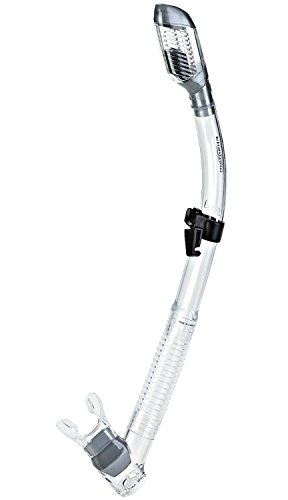
Full dry top snorkel with valve that seals completely when submerged. Purge valve at base for easy clearing. Made in Italy.

Classic open-mesh dive bag. Drains instantly after shore entries. Holds full scuba kit including BCD, regulator, and fins. The standard bag at UK dive clubs.
As an Amazon Associate, we earn from qualifying purchases.
Products Mentioned in This Guide
Frequently Asked Questions
Related Guides
Find Your Perfect Gear
Expert guides for masks, fins, BCDs, regulators, and more. Gear up safely for your next dive.
Browse All Guides