Best Dive Fins 2026

Diver since fourteen. Learned in open water off the Atlantic coast and the Florida Keys, and have dived everywhere from Sipadan to the cold water of home. Decades of gear choices — good and bad — behind every recommendation.
Just so you know, some links on this page are affiliate links. If you buy something via them, we get a small kickback. You don't pay more, but it helps toward the next dive trip.
Looking for more gear recommendations?
Browse All GuidesGood fins don't make you feel powerful -- they make effort feel optional. The right blade stiffness for your kick style means you're holding position in surge without noticing you're doing it. Wrong fins and you're working twice as hard to move half as fast, burning through your air before the good section of the dive.
My pick for most American divers: the [Mares Avanti Quattro+](https://www.amazon.com/dp/B00AR7S3UK?tag=divegearadvice-20&ascsubtag=best-dive-fins-us). It's the industry standard for a reason -- versatile across kick styles, works in Caribbean calm and California current, and lasts for years. If you're new to diving or replacing a first pair, start there.
Quick Picks
Not sure which setup is right for you?
Browse All GuidesUnderstanding Fin Types
Before diving into specific recommendations, you need to understand what you're choosing between.
Open Heel vs Full Foot
Open heel fins have an adjustable strap that goes behind your heel. You wear them with dive booties. Full foot fins slip on like a shoe with no separate booties needed.
For scuba diving in the US, open heel fins are the standard choice. They work with any exposure suit thickness, provide ankle protection on rocky shore entries, and the booties add warmth in cooler water. Full foot fins are fine for warm water snorkeling or pool training, but they're not practical for most diving.
Paddle Fins vs Split Fins
Paddle fins have a single solid blade. Split fins have a blade divided down the middle, creating two separate surfaces.
Split fins were heavily marketed in the early 2000s as easier on your legs and more efficient. The reality is more nuanced. Split fins do require less effort per kick, but they also provide less thrust. They're acceptable for casual reef diving in calm conditions, but struggle in current and make frog kicks (used by technical divers and underwater photographers) nearly impossible.
For most American diving, paddle fins remain the better choice. They're more versatile across conditions and kick styles.
Blade Stiffness
Fin blades range from soft and flexible to stiff and powerful. Softer fins require less leg strength but provide less thrust. Stiffer fins deliver more power but tire your legs faster.
Match blade stiffness to your leg strength and diving style. Casual reef divers generally prefer medium stiffness. Current-fighting California divers and technical divers often prefer stiffer blades. No blade stiffness is objectively better, it's about matching the fin to the diver.
Why These Picks
I've spent a lot of time on r/scuba and in dive club threads going through fin recommendations. The pattern is clear: a small number of models come up repeatedly across very different diving communities -- California shore divers, Caribbean boat divers, Great Lakes wreck divers. I've focused on fins that show up consistently across those different contexts rather than specialists that excel only in narrow use cases.
Scuba Diving Magazine's testing and the consensus from experienced instructors align well here. These aren't the newest fins or the most aggressively marketed -- they're the ones that keep getting recommended year after year because they actually work.
Detailed Reviews
Cressi Frog Plus - Best Budget
The Cressi Frog Plus is where I point new divers who don't want to overspend on their first fins. It's not the cheapest option on the market, but it's the cheapest option that actually works well.
Cressi has been making dive gear in Italy since 1946. The Frog Plus reflects that experience. The blade is medium stiffness, generating good thrust without requiring exceptional leg strength. The foot pocket is comfortable for longer dives, a detail cheaper fins often get wrong. The rails along the blade edges channel water efficiently, improving propulsion.
The Frog Plus handles Caribbean reef diving, Florida springs, and California kelp forests adequately. They won't outperform purpose-built fins in any specific condition, but they won't hold you back either.
The foot pocket runs true to size. Go with your normal dive bootie size. The included rubber straps are adequate but worth upgrading to spring straps if you dive frequently -- the Frog Plus accepts standard spring straps and the difference in daily convenience is immediate.
One thing worth knowing about this fin that cheaper options miss: the rails along the blade edges channel water efficiently for the price point. On a calm Caribbean reef you won't feel a dramatic difference from anything else in this range. In mild current, the channelling gives noticeably better grip on the water column. That's precisely where sub-$50 budget fins start to feel like they're working against you rather than with you.
Pros: - Excellent value for quality - Comfortable foot pocket for longer dives - Medium stiffness works for most divers - Proven design with decades of refinement
Cons: - Heavier than premium alternatives - Rubber straps could be better quality - Not ideal for strong currents
---
Mares Avanti Quattro+ - Best Overall
The [Mares Avanti Quattro+](https://www.amazon.com/dp/B00AR7S3UK?tag=divegearadvice-20&ascsubtag=best-dive-fins-us) is the fin against which all others are measured. Walk into any dive operation in the world and you'll see Quattros. Instructors use them, dive masters use them, experienced recreational divers use them. There's a reason for that.
The Quattro's channel thrust technology isn't marketing nonsense. The four longitudinal channels on the blade actually do direct water flow more efficiently than flat blades. You get noticeable propulsion improvement over basic fins without the leg fatigue of extremely stiff blades. The design finds the sweet spot between power and efficiency.
The foot pocket is one of the best in the industry. Comfortable, secure, and works well with different bootie thicknesses. The ABS buckles are reliable and easy to adjust, even with thick gloves.
Where the Quattro+ really shines is versatility. It handles flutter kicks, frog kicks, and modified flutter kicks equally well. It works in calm Caribbean water and fights California currents. It's not a specialist fin, it's an everything fin.
Durability reports from long-term owners are consistently strong -- multiple divers on r/scuba report 10+ year lifespans with normal care. That longevity makes the modest price premium over budget fins worthwhile over time.
Pros: - Industry standard for good reason - Excellent balance of power and efficiency - Comfortable foot pocket fits most booties - Works well with multiple kick styles - Extremely durable construction
Cons: - Slightly bulkier for travel than some alternatives - Not the absolute lightest option - Channel design can trap debris
---
Apeks RK3 - Best for Technical Diving
The [Apeks RK3](https://www.amazon.com/dp/B07GGLFT2V?tag=divegearadvice-20&ascsubtag=best-dive-fins-us) is what you see on technical divers, cave divers, and wreck penetration specialists. The stiff blade delivers maximum thrust for situations where you need power, fighting current, moving through tight spaces, or ascending against water flow.
The RK3's design favors the frog kick, the propulsion technique preferred by tech divers for its efficiency and minimal silting. The blade's stiffness translates kick power into forward motion with minimal blade flex. If you're used to softer fins, the RK3 takes adjustment, but the power is undeniable.
The foot pocket is compact, which tech divers appreciate because it doesn't interfere with drysuit gaiters or ankle weights. The spring straps are included and excellent quality, a significant advantage over fins that ship with rubber straps.
For recreational divers, the RK3 might be overkill. The stiff blade requires stronger legs and a practiced kick cycle. But if you dive currents regularly, plan to progress into technical diving, or simply want maximum power, the RK3 delivers.
One practical note: the RK3 is negatively buoyant, which helps with trim but means they sink quickly if dropped. Keep a firm grip during entries and exits.
Pros: - Maximum power and thrust - Excellent frog kick performance - Spring straps included - Compact foot pocket - Durable construction
Cons: - Stiff blade requires strong legs - Not ideal for casual reef diving - Negatively buoyant, sinks if dropped - Higher price point
---
Scubapro Seawing Nova 2 - Best for Travel
The Scubapro Seawing Nova 2 is premium-priced but solves a real problem for traveling divers. The pivoting blade design is more compact than traditional fins, saving valuable luggage space. More importantly, the blade articulates to maintain optimal angle throughout your kick cycle, improving efficiency.
The pivot blade technology isn't gimmick. The blade hinges at the foot pocket, automatically adjusting to your kick motion. On the downstroke, the blade angles to push water backward. On the upstroke, it reduces drag. The practical effect is less effort per kick, noticeable during long dives.
For dive travelers who fly frequently, the Nova 2's compact size is the main selling point. These fins fit in carry-on luggage where traditional paddle fins won't. If you've ever paid overweight baggage fees because of dive gear, you understand the value.
The foot pocket is comfortable and works with standard dive booties. The bungee heel strap makes donning and doffing quick, important when you're gearing up on crowded dive boats.
The premium price is the main barrier. These fins cost nearly twice what the Quattro costs. The technology works, but whether it's worth the premium depends on how much you value travel convenience and kick efficiency. My honest take: if you fly to dive sites more than three or four times a year and have ever paid overweight baggage fees, the Nova 2 pays for itself over time. If you mostly dive from a boat launch or shore site near home, the Quattro is the smarter buy.
Pros: - Compact design saves luggage space - Pivot blade improves kick efficiency - Quick bungee heel strap - Comfortable foot pocket - Reduced leg fatigue on long dives
Cons: - Premium price point - Pivot mechanism adds complexity - Less powerful than stiff paddle fins - Bungee strap harder to adjust than buckles
---
What to Avoid
Split fins for anything beyond casual warm water diving: Despite the marketing, split fins simply don't perform well in current or with frog kicks. If you ever plan to dive California, do drift dives, or progress beyond basic reef diving, you'll eventually replace them with paddle fins. Skip that intermediate step.
Ultra-cheap fins under $50: At this price point, you get uncomfortable foot pockets, blades that flex too much to generate thrust, and straps that break. Rental fins from dive shops are often better than the rock-bottom fins you'll own.
Fins that don't fit your booties: Fin sizing assumes you're wearing dive booties. Try fins on with your actual booties before buying. A fin that fits your bare foot will be too tight with booties.
Full foot fins for scuba diving: They're fine for snorkeling, but full foot fins don't work with exposure suits, provide no ankle protection on shore entries, and can't be adjusted for different bootie thicknesses.
---
Buying Considerations
Spring straps are worth it. If your fins come with rubber straps, immediately replace them with spring straps. Spring straps are easier to don and doff, never break, and don't degrade in sunlight. This is the single best upgrade for any fin.
Sizing matters. Fin sizes correspond to your bootie size, not your shoe size. Most manufacturers use XS/S/M/L/XL sizing rather than numerical sizes. Check the manufacturer's sizing chart and when in doubt, go smaller. A slightly tight fin is better than a loose fin that blisters your feet.
Match fins to your diving. Casual Caribbean reef divers don't need the stiffest, most powerful fins available. Current-fighting California divers need more thrust. Think about where and how you'll dive most often, then choose accordingly. A medium-stiff paddle fin like the Quattro+ covers roughly 80% of American diving scenarios without compromise.
Try before you buy when possible. Some dive shops let you demo fins in their pool. Some rental operations sell their used fins. Any opportunity to test fins before committing helps ensure you'll be happy with your choice. If you can't try before buying, check the return policy -- most reputable online dive retailers accept returns on unused gear within 30 days.
---
Kick Styles and Fin Choice
The fins you buy should match how you kick -- and how you kick should change depending on where you're diving.
Flutter kick is what most divers learn in open water. You alternate legs in a continuous up-and-down motion driven from the hip. It's efficient in open water and works well for covering distance on reef dives. Medium-stiffness paddle fins like the Quattro+ handle flutter kicks well.
Frog kick is what technical divers, cave divers, and underwater photographers learn next. Instead of alternating legs, both legs move together in a simultaneous outward-and-inward sweep, like a frog swimming. The technique generates thrust on the recovery stroke with minimal silt disturbance -- essential in caves or when hovering over delicate reef. Stiffer blades like the Apeks RK3 are specifically designed to respond well to frog kicks. Split fins make frog kicks nearly impossible.
Helicopter turn and reverse kick are advanced techniques that let you spin in place or move backwards without disturbing sediment. Both require stiff paddle fins -- they can't be done effectively with split fins or very soft blades.
For most American diving -- Caribbean reefs, Florida springs, California kelp -- you'll use flutter kick most of the time and benefit from learning frog kick as you progress. A medium-stiff paddle fin handles both. Only consider stiffer blades if you're specifically pursuing technical training or diving environments with strong current.
Scuba Fins vs Freediving Fins
A note for divers who also freedive or spearfish: scuba fins and freediving fins are different tools.
Freediving fins are long -- sometimes 80-90cm blade length -- and extremely flexible. They're optimised for powerful, slow kick cycles that work with breath-hold diving. On scuba, they're clumsy and unwieldy; the extra length catches on things and the soft blade doesn't respond well to the faster kick cycles you use with a tank.
Scuba fins are shorter and stiffer by comparison. They work well with the kick rates and air management of scuba diving. Don't use one for the other. If you do both, own both.
My Recommendation
For most American divers, the [Mares Avanti Quattro+](https://www.amazon.com/dp/B00AR7S3UK?tag=divegearadvice-20&ascsubtag=best-dive-fins-us) is the right choice. It handles every condition you'll encounter, works with any kick style, and lasts for years.
Budget-conscious divers: the Cressi Frog Plus. A solid all-around fin that won't hold you back while you develop your diving skills.
Divers heading into technical training or dealing with strong currents regularly: the [Apeks RK3](https://www.amazon.com/dp/B07GGLFT2V?tag=divegearadvice-20&ascsubtag=best-dive-fins-us). The extra power is worth it for those applications.
Travel divers who fly frequently: the Scubapro Seawing Nova 2 if the luggage space savings matter to you.
---
Buy the Quattro+, add spring straps, and stop thinking about fins. The interesting part of every dive happens between the entry and the exit -- fins that work let you focus there.
Frequently Asked Questions
What size fins do I need?
Fin sizing varies by manufacturer and style. Open-heel fins are sized by boot size -- buy your dive boots first, then size the fins to fit over them. Most brands use S/M/L/XL rather than numeric sizes; Mares, Cressi, and Scubapro all publish size guides based on boot size. For full-foot fins (typically used for warm-water snorkeling rather than scuba), you size directly to your bare foot. When in doubt, size up -- a slightly loose fit with neoprene socks is manageable; a fin that's too tight cuts circulation and makes the dive miserable.
Should I buy spring straps separately?
Yes, if your fins use buckle straps. Spring straps replace the buckle-and-strap system with a continuous bungee loop that holds the fin on your foot without adjustment. The practical benefit: you don't need to adjust strap tension between dives, and the spring mechanism is more reliable than buckle hardware in cold, wet conditions. They cost relatively little per pair and make every entry and exit slightly easier. Worth buying at the same time as the fins rather than retrofitting later.
How long do fins last?
Quality dive fins last 10-20 years with normal care. The blade material (usually polypropylene or thermoplastic elastomer) doesn't degrade significantly with use. What fails first is typically the foot pocket rubber -- UV exposure and repeated flexing causes cracking near the blade-pocket junction -- and the strap hardware. Rinse thoroughly after saltwater dives, dry before storage, and keep out of direct sunlight. A fin stored properly from 2010 will still be in service in 2030.
Do I need fins specifically for cold water?
Not specifically, but blade stiffness matters more in cold water because you're typically wearing heavier exposure protection and may be fighting stronger currents at sites like Channel wrecks or Puget Sound. Stiffer blades generate more thrust per kick, which is useful when you have the leg strength to drive them. Softer blades are more efficient for low-intensity recreational diving in calm conditions. The Mares Avanti Quattro and Apeks RK3 are both popular for cold water precisely because their stiffness handles demanding conditions -- neither would be the first choice for a casual warm-water reef dive.
What's the most common fin mistake new divers make?
Bending at the knee. The instinct is to pedal like a bicycle, using rapid kicks from the knee down. This fatigues the quads quickly and moves relatively little water. The efficient flutter kick drives from the hip, with the knee bending only slightly on the downstroke -- the fin blade acts as the end of a long lever, and slow hip-driven strokes are far more efficient than fast knee-driven ones. Most new divers who consciously switch to hip-driven kicks notice their air consumption drops within a single dive. The second mistake is pulling fins off immediately after exiting the water -- on boat dives, fins should stay on until you're safely on deck, as the blade gives grip on ladders and slippery surfaces.
What You'll Need With It
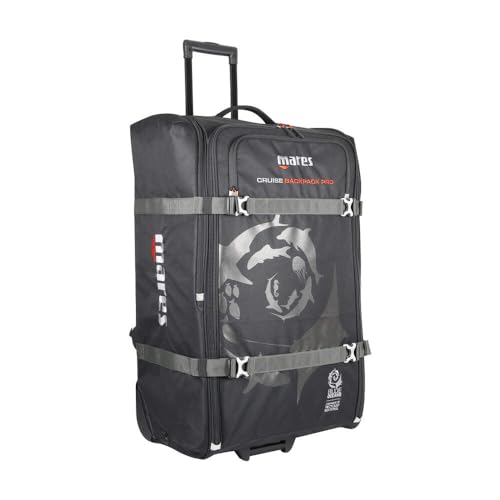
Large mesh backpack-style dive bag with padded shoulder straps. Fits full scuba kit including BCD, regulator, wetsuit, and fins. Ideal for shore diving with a walk to the entry point.

UK-designed hood with excellent mask compatibility. Proper face seal for British conditions. Essential for UK diving year-round.
As an Amazon Associate, we earn from qualifying purchases.
Products Mentioned in This Guide
Frequently Asked Questions
Related Guides
Find Your Perfect Gear
Expert guides for masks, fins, BCDs, regulators, and more. Gear up safely for your next dive.
Browse All Guides